ENS評論:美政府對商業捕鯨 舉白旗投降


摘譯自2008年9月10日ENS評論;江昱均編譯;蔡麗伶審校

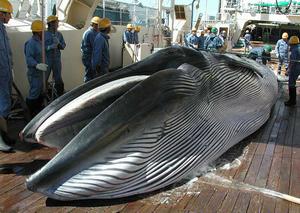
一隻罕見的布氏鯨被日本捕鯨船在北太平洋捕獵(圖片來源:Institute of Cetacean Research)在美國政治兩黨分立之際,鮮有議題能夠得到所有人支持。但是,看她如何換氣噴水!從陽光映照閃亮的海面上一躍至政治圈,美國人熱愛鯨魚。

過去10年來的民調持續顯示許多共和黨員、民主黨員和無黨派人士全都壓倒性地要求為後代子孫妥善保護這些壯美的生物。來自各個派系和次要團體的選民─從鄉村、保守派的老大黨到都市自由派的民主黨─全都要求美國政府採取行動終結日本、冰島和挪威復甦的商業捕鯨活動。

這個星期來自26個國家的代表將集結參與在佛羅里達州聖彼德海灘貿易風島灘度假勝地舉行不對外公開的秘密會議,聆聽長久以來總統指派的霍加斯博士(Dr. William Hogarth)推行一項布希總統的計畫,翻轉全球捕鯨禁令,向日本要求的新捕鯨數量配額低頭。

國際捕鯨委員會(International Whaling Commission, IWC)由80個國家代表組成,理應負責保育全球鯨魚,而非大舉捕殺。在1986年時,國際捕鯨委員會設下一道商業捕鯨的中止令,堪稱為20世紀重大保育成就之一。自此之後,國際捕鯨委員會只發給原住民能夠維持基本生計的捕鯨配額,像是阿拉斯加原住民的例子。

然而自從該禁令頒布以來,已經有超過3萬頭的鯨魚因為商業目的遭到捕殺。

日本政府宣稱捕殺鯨魚是為了科學研究,在國際海域捕鯨數量已然增加5倍之多,並且威脅將把最具代表性的座頭鯨加入獵殺名單中。日本每年的科學捕殺多數都在鯨魚禁獵區範圍裡進行!

即使沒有遭受捕殺這項攻擊,現今鯨魚所面臨的威脅比過去多得多,包括海洋污染、主要棲地遭受破壞與惡化、受困捕魚裝置、與高速船艦衝撞、航海噪音污染、因地震測試與不明原因濫用的致命雷達。

考慮以上種種因素,這些威脅對剛開始從過去兩個世紀商業捕殺慢慢恢復的鯨魚數量帶來真正的挑戰。

如果海裡的狀況對鯨魚來說很糟,以保護鯨魚為目的而成立的委員會裡的情形更是糟糕透頂。

經過美國多年來的搖擺不定和漠不關心,對保育十分關切的國家發現陣營人數大輸,甚至有時被50名強硬的日本代表巧取豪奪,同時冰島、挪威和這幾年加入委員會的一群小島國家與發展中的內陸國家全都與日本沆瀣一氣。

就在美國在國際捕鯨委員會的影響日漸削減之際,日本政府在委員會都變得更加積極參與、態度挑釁,只為了追求她公諸世界的目標─獵殺更多鯨魚。

面對這項挑戰,布希政府曾經一度決意退縮。美國代表將在聖彼得堡的會議中關起門來懇求和平,準備好以撤銷捕鯨禁令,來交換布希政府認為是妥協、而非挫敗的空洞配套措施─一套即使是霍加斯博士都承認美國政府絕不公開支持的配套措施。

相較於佛羅里達州,在基本規則更適於蘇聯的情況下,聖彼得堡會議將不對媒體、觀察家和非政府專家公開,取消過去數年來美國主導之透明與公開的國際捕鯨委員會。

總統候選人請注意:大多數美國人一致要求政府帶領終結商業捕鯨活動。他們要求強硬的公開宣言以及深具意義的外交行動。多數人甚至支持適度的國際貿易制裁。將近60%的選民表示他們傾向將票投給堅定反對日本捕鯨行動的總統候選人。

如果我們認真對待這項議題─而今尚未太晚─美國有力量改變國際捕鯨委員會的狀況和屬於鯨魚的家。悲哀的是,日本、冰島和挪威政府對捕殺鯨魚的熱中程度遠比布希政府對保育和保護鯨魚來的高。

※ 拉馬治(Peter Ramage)是國際動物福利基金會(International Fund for Animal Welfare)全球鯨魚計畫(Global Whale Program)執行長。您可以透過以下電子郵件信箱與拉馬治先生交流:pramage@ifaw.org

INSIGHTS: Waving the White Flag on Whaling
YARMOUTH PORT, Massachusetts, September 10, 2008 (ENS) -

In this season of political polarization, it is rare to find a massive issue on which we all agree. But thar' she blows! From sea to shining sea and across the political spectrum, Americans love whales.

Polls conducted over the past decade consistently show overwhelming majorities of Republicans, Democrats and Independents want these magnificent creatures protected for future generations. Voters of all persuasions and subgroups - from rural, conservative GOP-types, to urban, liberal Democrats - want our government to take action to end resurgent commercial whaling by Japan, Iceland and Norway.

Next week, representatives from 26 countries will gather in a secret, closed-door meeting at the Tradewinds Islands Grand Beach Resort in St. Pete Beach, Florida, to hear longtime presidential appointee Dr. William Hogarth push a Bush plan to overturn the global whaling ban and bow to Japanese demands for new whaling quotas.

The International Whaling Commission is an 80 nation body charged with the conservation of our planet's great whales, not their decimation. In 1986, the IWC imposed a moratorium on commercial whaling, culminating in one of the 20th century's most important conservation successes. Since then the IWC has issued quotas only for Aboriginal subsistence whaling such as that responsibly conducted by Alaska natives.

Yet more than 30,000 whales have been killed for commercial purposes since the ban.

The government of Japan, claiming it kills whales for science, has increased its whaling in international waters five-fold and is threatening to add the iconic humpback whale to its target list. Most of Japan's annual scientific slaughter is conducted in an international whale sanctuary!

Even without this assault, whales face more threats today than ever before in history including marine pollution, destruction and degradation of critical habitats, entanglements in fishing gear, collisions with high speed vessels, ocean noise pollution from shipping, seismic testing and indiscriminate use of deadly sonar.

Taken together, these threats pose real challenges to whale populations just beginning to recover from more than two centuries of commercial slaughter.

If the situation in the water is bad for whales, the situation inside the commission established to protect them is worse. After years of U.S. drift and disinterest, conservation-minded countries find themselves outmanned and sometimes outmaneuvered by a 50 person strong Japanese delegation, Iceland, Norway and a steady stream of small island states and landlocked developing countries recruited to the IWC in recent years to vote in lockstep with Japan.

While United States influence inside the IWC is on the wane, Japan's government is far more focused, engaged and aggressive, inside and outside the IWC, in pursuit of its declared objective - to kill more whales.

Faced with this challenge, the Bush administration has, for once, decided to retreat. Our delegation will sue for peace behind closed doors in St. Petersburg, ready to trade away the whaling ban for a package of empty measures it will insist result from compromise rather than defeat - a package even Dr. Hogarth admits the U.S. may never publicly support.

With ground rules better suited to Soviet Russia than sunny Florida, the St. Petersburg meeting will be closed to media, observers and nongovernmental experts, undoing years of transparency and openness at the IWC achieved with U.S. leadership.

Candidates please note: consistent majorities of Americans want their government to lead the fight to end commercial whaling. They want strong public statements and meaningful diplomatic action. Most would support measured trade sanctions. Nearly 60 percent say they would be more likely to vote for a candidate for president who took a firm stand against Japanese whaling.

If we take the issue seriously - and it's not too late - the United States has the power to change the situation in the IWC and in the water for our planet's great whales. Sadly, it appears the governments of Japan, Iceland and Norway care more about killing whales than the Bush administration cares about conserving and protecting them.

Patrick Ramage is director of the Global Whale Program for the International Fund for Animal Welfare. You can email him at: pramage@ifaw.org

全文及圖片詳見:ENS


發表時間: 週二, 2008-09-16 10:05 提交人: 龔玉玲

發表時間: 週二, 2008-09-16 23:06 提交人: Ben (沒有被驗證)

長久以來我對於物種保育常有一些不同的看法,
例如:南韓把狗當作食用肉類的事件,
我並不覺得是錯誤的事情,
為何要連署抗議,
如今,殺鯨豚作為食用蛋白的來源,我也認為有何不可?
如果只是因為他們很可愛,
就要禁止捕捉,
我還想問一問,這一些被殺掉的雞或是豬難道不可愛啊!?

每一種物種都有牠們演化的年齡,
如果牠們已經到了演化的末端(如:貓熊),
本該就要走上絕種的路,
為何我們還要花極多的金錢來復育牠們?
為何不將這一些錢花在棲地保育,
讓更多生物存活下來!

但是以目前的物種滅絕的狀況,
大多是人類所造成的,
從過渡漁獵,
到棲地破懷,
無一不是人類所為,
那要保護這一些物種似乎也要從人類的行為加以限制,
限制不當資源的取得,
限制為了住舒適一點,就大舉破壞環境,
限制一些非理性的殺生等等,
也許,
當人類可以真正感受到周圍生物都不見啦!
感到孤獨寂寞時,
才會真正想放下屠刀吧!

發表時間: 週三, 2008-09-17 21:43 提交人: greenlost (沒有被驗證)

若如Ben所說,如果物種到了演化的末端則不需花費這麼多的金錢來保育,
那麼,我們又何必花這麼多的金錢來保育棲地?何必讓更多要在天擇中消失的生物存活下來?

發表時間: 週三, 2008-09-17 22:22 提交人: 納豆 (沒有被驗證)

其實,ben的看法也是我部分的疑惑
不過,我會把物種保育和動物福利分開來看待
雖然有某種程度的相關,但卻是不同的議題

例如因為對動物個體所承受的痛苦感同身受
而不願意抓牠殺牠吃牠
或是不得不吃牠的時候願意採取一些作法讓牠的動物最小化
我認為算是動物福利的範疇

而如果是考量物種種群變小有消失之虞
是考量整體而不是單一個體
則算是物種保育的範疇

不過,ben所說的又牽涉到物種保育和棲地保存的辨證
有人認為,過度強調某些明星物種(如鯨豚、熊貓、黑熊、信天翁、櫻花鉤吻鮭等)
反而會因只專注在物種的繁衍,而忽略了物種消失最根本的原因──生存環境惡化,也就是棲地惡化

而我們的確看到一些過度強調明星物種的弊病,如花大把錢在人工復育上,卻不願意花錢籌設保護區的經營管理上

不過,我倒是覺得只強調單一物種的困境,如果適度的話,也可以同時呈現出棲地維護的問題,並非壞事。我想有時候物極必反,有人會因為看到過多資源投注在明星物種卻忽略棲地問題而心急吧。

發表時間: 週一, 2008-11-24 14:27 提交人: 牧羊人 (沒有被驗證)

我想知道一下

在國際捕鯨規範裡所能夠的捕鯨範圍

以及相關組織與安排之間的關係

請問哪裡有這些相關的資訊

發表新評論

此內容將保密,不會被其他人看見。
  • 網址和Email帳號會自動加上url連結。
  • 行和段被自動切分。
更多格式化信息