|
作者:Lauren Gravitz 基督教科學監測報特別報導
在巴西Curaca的每天傍晚,當一隻深藍灰色的鸚鵡飛過頭頂,回到牠夜間棲息處,當地的居民響起一陣歡呼。牠是目前在大自然裏,這類鸚鵡的最後倖存者。
由於走私,金剛鸚鵡己經被逼到絕種的邊緣。人們之所以捕捉金剛鸚鵡不只為了牠的美麗也由於物以稀為貴。現在,這唯一僅存的野生鳥-長尾金剛鸚鵡,可說是對人類關於物種迫害的一項提醒。
幾千年來,人類不斷地改變了自然環境。許多科學家相信,早期的人類至少得為長毛大象的絕跡負一部份責任。然而,保育瀕臨絕種的動植物說起來還算是一種較新穎的觀念。保護動植物法規的通過,也不過是在20世紀中葉後才有的事情。
美國在1967年才通過第一個保護瀕臨絕種動植物的法令。第一個國際保育協約,CITES(瀕臨絕種動植物國際交易公約)也接著很快地通過。可是在過去數百年來,人類不只消滅了許多的物種,更破壞整個動植物的棲息地。負責美國魚類與野生生物國際事務項目的Susan Lieberman指出,最近一百年中,瀕臨絕種動植物的情況,遠比過去的900年來的糟糕。
今天,地球正在遭遇自恐龍消失後最大規模的滅絕。科學家預估,平均每15分鐘,就有一個物種消失。其主要的原因就是因為人們的開發、污染、狩獵以及引入異地的動植物而破壞了原生物種的平衡。
解決問題的方法說來是有點微妙,有時它有效,有時卻不然。其中一個在美國最為人稱道的成功案例就是禿鷹的復育。由於受到棲息地流失,狩獵與DDT藥性毒害等威脅,這個代表美國國家象徵的生物,已經是到了快到絕滅的地步。在1963年美國本土的48州中,只剩下417對會築巢的禿鷹。
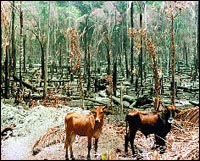
火災過後的雨林
當瀕臨滅絕物種的棲地受到破壞時,他們生存的機會也大受威脅
(GREGG NEWTON/路透社)
在1967年,美國政府宣佈捕捉這瀕臨絕種的鳥類是違法。到了1998年,因為不再捕殺、禁用DDT以及控制性的繁殖計畫,讓這類禿鷹的數量在美國又回升到5,800對左右。另一個從絕種邊緣搶救回來的物種是非洲犀牛。人們捕殺犀牛主要是為了犀牛角在傳統中藥上的用處。狩獵者成批地獵殺犀牛以供應大量的需求。在某些國家,透過和當地社區的合作,犀牛的數量以著令人振奮的速度在恢復。從原本世紀初不到100頭的數量,到現在已有超過10000頭的南方白犀牛。
在其它國家,犀牛數仍在減少。雖然補殺犀牛是犯法的,但是在黑市中人們願意以高價交易犀牛角藥粉,所以仍然對於犀牛生存造成明顯的威脅。類似像CITES之類的國際協定雖可以促使簽署國制定相關保育法令,但是這些國家往往沒有足夠的金錢或是人力去確實執行法令。
此外,受人為開發影響的物種更是容易受到其他危害的威脅。例如黑松雞heath hen(松雞prairie chicken的親屬)原本在美國東岸極多,但是因為早期殖民者捕捉這種鳥類為食並將牠們的棲息處轉變成農地,到了1870 年代,牠們的數量銳減到只剩下存活在麻州海邊一座小島上的個位數。
1908年,人們了解到這種飛禽即將會絕滅,開始為僅存的50多隻鳥兒建立一個庇護處。牠們的數量繁衍,在7年之後有超過2000隻的數目。但是接下來的幾年間,先是一場大火,接著掠奪者、惡疾,致使這種鳥類在1932年後便完完全全地消失了。
加洲自然保育組織的保育學主任Sanjayan表示, 等到物種快到消失了才採取保育措施是很難有成效的。
. Sanjayan博士說:並不是單一件事導致絕種,一但數量減少,許多因素攪混在一起,最後使得物種完全消失。當你在考慮物種數量減少時,最好也主動一併考慮其它問題。
一次拯救單一物種就好比是見樹不見林的作法,自野生物保育基金主任Steve Osofsky表示。保護絕大多數瀕臨絕種動植物的最好方式,就是保護牠們的棲息地。
全文及圖示詳見: http://www.csmonitor.com/atcsmonitor/specials
/athousandyears/ideas/env4.html
版權歸屬 Ecotrust website,環境信託基金會 (蔡季勳 譯,黃媺雯 審校)
中英對照全文:http://news.ngo.org.tw/issue/animal/
issue-animal00083001.htm |
|
Habitat preservation is the key to saving endangered species.
Lauren Gravitz Special to the Christian Science Monitor
Each evening in Curaca, Brazil, when a small sapphire-blue and gray parrot flies overhead to roost for the night, local residents cheer. He is the last of his kind in the wild.
Driven to the brink of extinction by smugglers, the Spix's Macaw is coveted not only for its beauty but for its rarity. Now, with only one wild bird remaining, the long-tailed parrot has become a reminder of how fragile a species can be.
Humans have been altering the environment for millenniums: Many scientists hold that early man was at least partially responsible for the demise of the woolly mammoth. Conserving and protecting endangered species, however, is a relatively new concept. Laws and regulations to protect plants and animals were not passed until the second half of the 20th century.
In the United States, the first endangered species legislation was not passed until 1967. The first international treaty, the Convention on International Trade in Endangered Species (CITES), soon followed. Yet in the past few hundred years, humans have begun destroying not only individual species but entire habitats. According to Susan Lieberman of the US Fish and Wildlife Services International Affairs program, as far as endangered species go, "the previous 900 years were not nearly as bad as the last 100."
Today, the planet is experiencing the largest mass extinction since the dinosaurs disappeared. Scientists estimate that, on average, one species disappears every 15 minutes. The main causes are human development, pollution, hunting, and the introduction of exotic species that outcompete native species.
The solutions are a bit trickier: Sometimes they work, sometimes they don't. One of the most lauded successes in the US is the bald eagle. Threatened by habitat loss, hunting, and DDT poisoning, the country's national emblem hovered on the verge of extinction in the lower 48 states in 1963, with only 417 nesting pairs.
RAIN FOREST UNDER FIRE: When an endangered species' habitat is stressed, chances of survival drop. GREGG NEWTON/REUTERS
In 1967, the country declared the bird an endangered species, making it illegal to hunt. By 1998, lack of hunting, the ban on DDT, and a captive-breeding program had allowed eagle populations in the contiguous US to climb to almost 5,800 nesting pairs. Another species edging back from the brink of extinction is the African rhinoceros, whose coveted horn is used primarily in traditional Chinese medicine. Hunters nearly decimated the rhino populations to fill the high demand. In some countries, with the cooperation of local communities, rhino populations are rebounding at an incredible pace - there are now more than 10,000 southern white rhinos, up from less than 100 at the beginning of the century.
In other countries, rhino populations are still dwindling. Killing a rhino is now against the law, but because there is still a high-paying outlet in the black market for powdered rhino horn, the threat to rhino populations is very real. International treaties like CITES can prompt countries to institute laws, but the countries do not always have the money or strength to enforce them.
Additionally, species affected by human development can become so fragile that they are more susceptible to other dangers. The heath hen, for example, a relative of the prairie chicken, was once abundant on the East Coast of the US. But early colonists hunted the bird for food and used its habitat for farmland. By 1870, they had reduced the hen to a single population, which lived on an island off the coast of Massachusetts.
In 1908, realizing the bird was close to extinction, people established a refuge to protect the remaining 50 birds. The population thrived, and seven years later was 2,000-strong. But the next few years brought first fire, then predators, then disease. By 1932, the species was gone.
This, says M.A. Sanjayan, the director of conservation science for the Nature Conservancy in California, is why waiting until a species is endangered before protecting it is rarely effective.
"There's not one thing that creates extinction," says Dr. Sanjayan. And once the population has dwindled, he says, these factors can combine in a vortex to wipe the species out. "It's much better to think proactively when you think about population decline."
Saving one species at a time is like refusing to see the forest through the trees, says Steve Osofsky, the director for species conservation at the World Wildlife Fund. The best way to save the majority of endangered species, he says, is to protect their habitats.
http://www.csmonitor.com/atcsmonitor/specials/
athousandyears/ideas/env4.html |