
Frequent extreme weather events are quietly reshaping people's lives, and after each disaster, the most vulnerable parts of a city inevitably emerge. This autumn, the Environmental Information Center (EIC,環境資訊中心) traveled through Taiwan and Seoul, South Korea, to document how both places have built resilience and created the first line of defense in their everyday lives.
Taiwan's Lesson: Community-driven disaster prevention
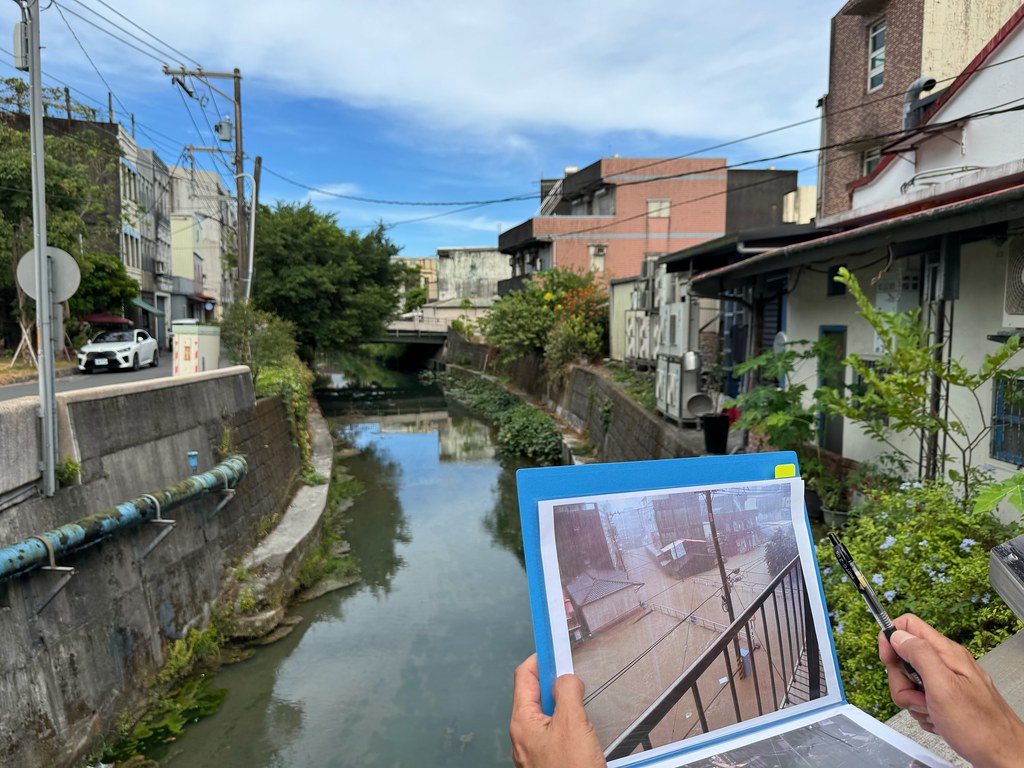
In October 2010, Typhoon Megi(梅姬颱風) devastated Su'ao(蘇澳) in Yilan. In Subai Village(蘇北里), home to the famous Su'ao Cold Springs, floodwaters reached the height of a full story, leaving 11 people dead. Locals refer to it as a once-in-a-century flood.
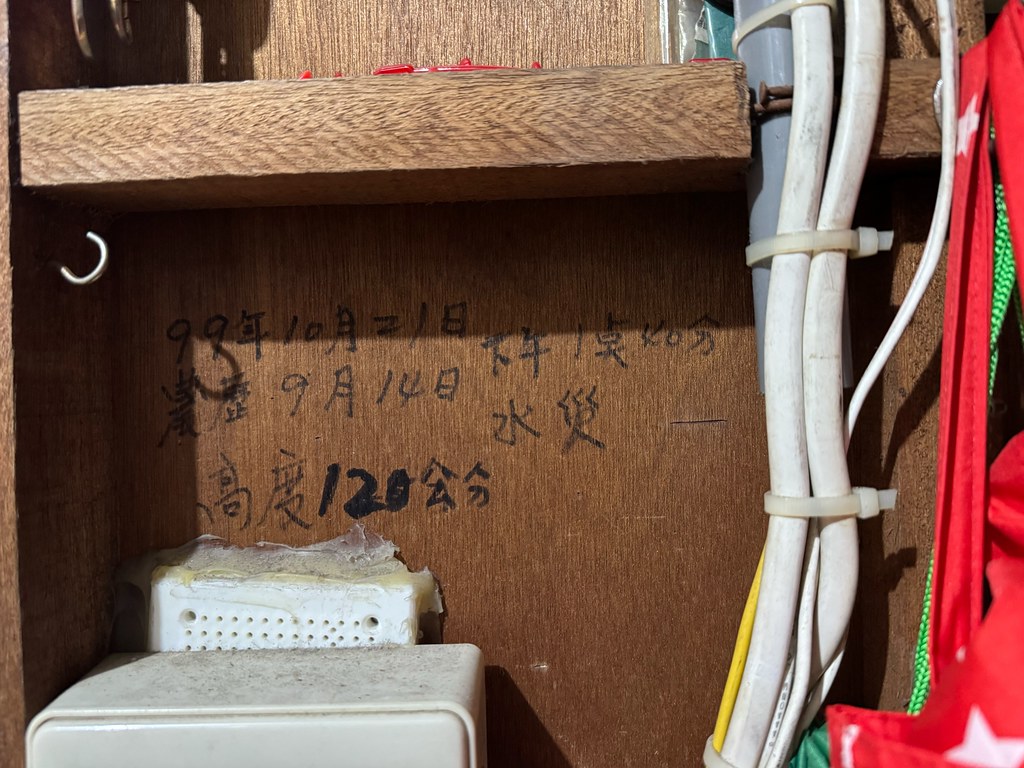
"Flood on October 21, 2010 at 1:40 p.m., water height 120 cm." Fifteen years later, this flood mark remains on the wall of Ching-Ji Jiang's (江清吉) home, director of Subai Community Development Association, as a reminder of "never forget the disaster".
After the disaster, village head Tian-Chi Chen (陳添琪) led Subai residents to strengthen community disaster preparedness. Determined to prevent a similar tragedy, residents formed a self-organized disaster prevention team.
Members undergo retraining every year and update their disaster prevention skills. Through detailed division of tasks and preparation, Subai has become one of Taiwan's top communities in disaster-prevention communities, guarding the neighborhood from slope disaster and flood.
Nowadays, whenever heavy rain occurs, patrol teams spread out to check flood-prone areas and slopes, reporting conditions so residents can respond early. Along the lowest-lying section of Su'ao, near the River Alishi (阿里史溪), monitoring equipments and two mobile pumps have been installed. The village head can view real-time footage via webcam, and he can turn on the pump once water reaches the warning level.
The disaster team has also set up four disaster information boards at locations prone to flooding or landslides, showing the past disasters that happened there and reminding people to stay alert.
As time passes, people tend to forget disasters.
In September 2015, The Agency of Rural Development and Soil and Water Conservation (農村發展及水土保持署, ARDSWC) of the Ministry of Agriculture launched a Historical Disaster Image Platform, initiating a "Historical Landslide Disaster Photos and Stories Collection" (土砂災害歷史照片與故事募集) campaign that invited the public to upload old disaster photos.
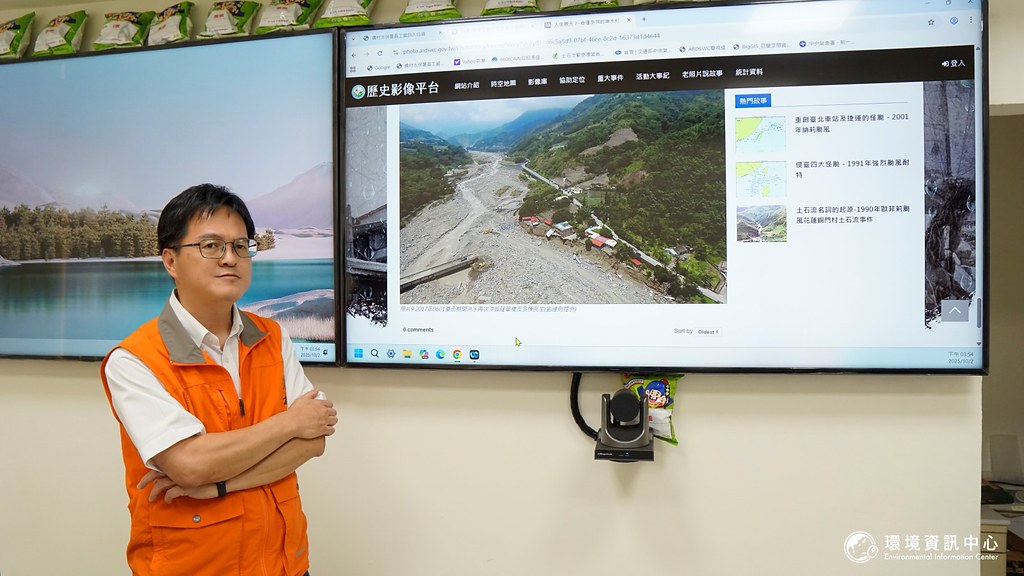
Since then, the platform has integrated maps, timelines, and narrative functions over ten years, accumulated more than 98,000 disaster photos.
Chen Chen-yu(陳振宇), head of the Disaster Mitigation and Monitoring Division of ARDSWC and the initiator of the platform, explained his motivation. "It's hard for the public to imagine past events when teaching the disaster classes or communicating with the local communities." Under these circumstances, historical photos serve as crucial evidence, "disasters always reoccur", he said.
"With more data, the database becomes even more valuable." Chen hopes to use images to spread disaster awareness. He said the platform may eventually become a comprehensive database that can help to forecast the areas prone to landslides, road outages, or debris flows.
In terms of geology, Taiwan is a very young and still developing island with over 75% of its land consisting of sloped terrain. Combined with frequent earthquakes and typhoons, the island is highly vulnerable to collapse.
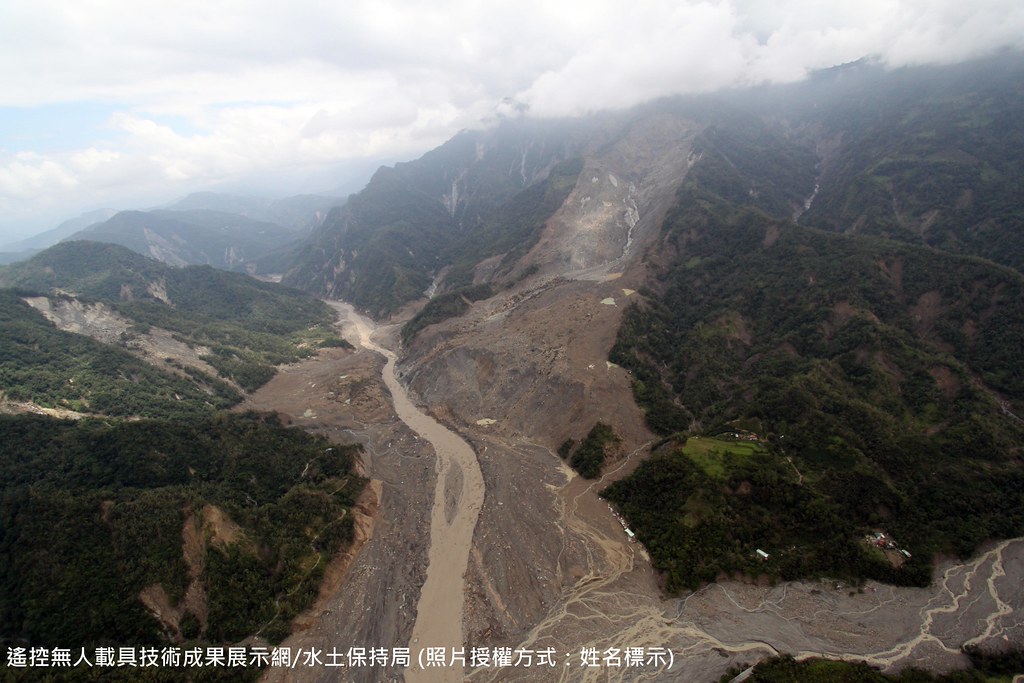
"In disaster prevention, the goal is to protect people," Chen emphasized. Since natural hazards cannot be controlled, Taiwan must strengthen its disaster strategies by identifying high-risk areas and establishing shared monitoring models.
In the past, governmental agencies often worked separately, but in recent years, consensus has grown around information sharing. Integrated platforms like old disaster collections allow professional collaboration and greatly benefit the disaster prevention system of different sectors.
Korea's Lesson: The imparity of safe housing from the flood disaster
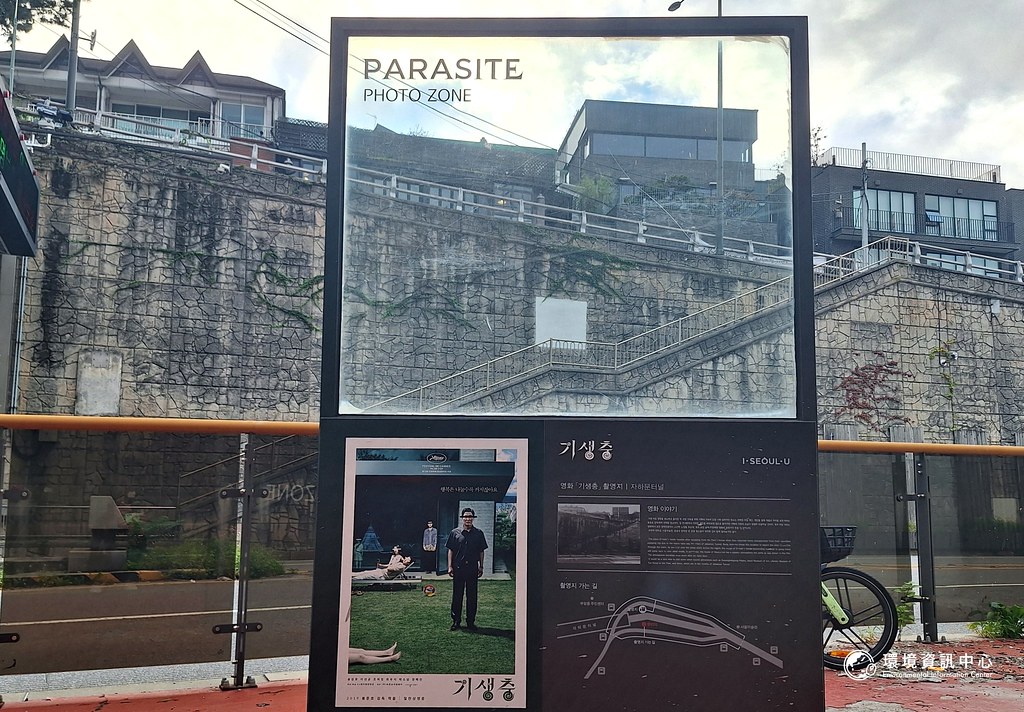
Different countries and locations carry different housing risks. The 2019 South Korean film Parasite introduced global audiences to the cramped "semi-basement housing" where the Kim family lived—a space that foreshadowed their desperate climb toward a better life.
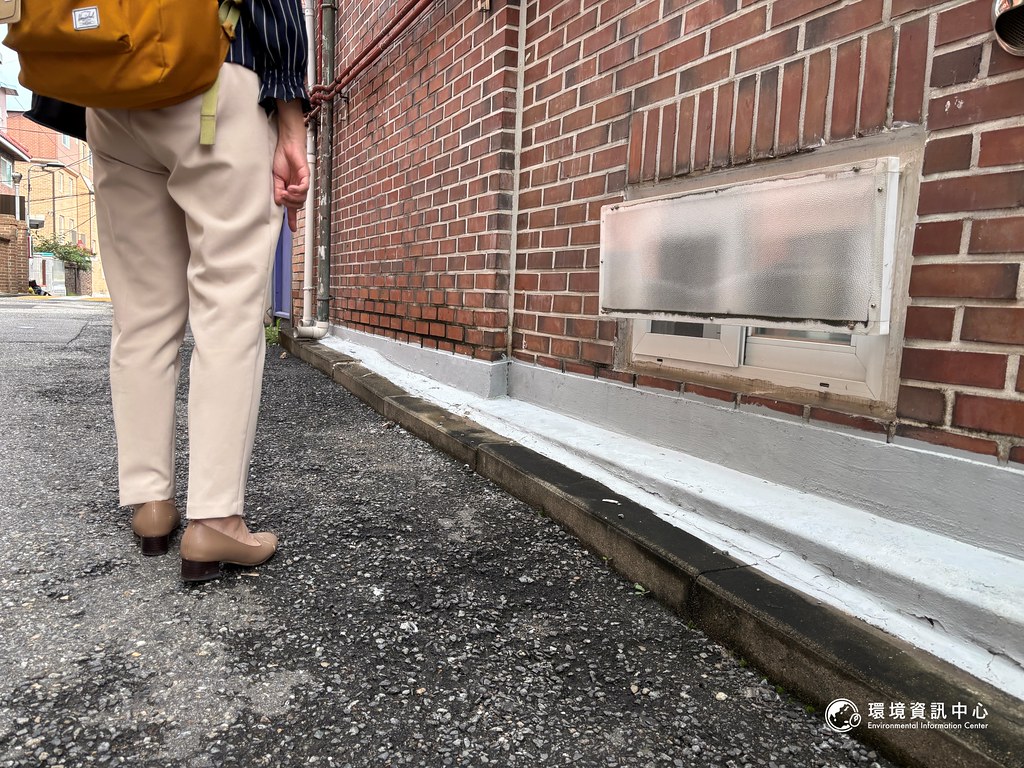
The movie Parasite served as outsiders' first glimpse into semi-basement living while the 2022 Seoul flood—when heavy rain poured into a semi-basement home and three residents drowned—revealed its harshest reality.
Three years have passed. Environmental Information Center's reporters visited Seoul seeking South Korean's solution to address the dangers of semi-basement housing.
Yoon Shin-young(윤신영), media director of the Science Media Center Korea (SMCK), told us that based on his data analysis, the speed of demolishing the semi-basement units has been extremely slow, around 100 to 200 units per month.
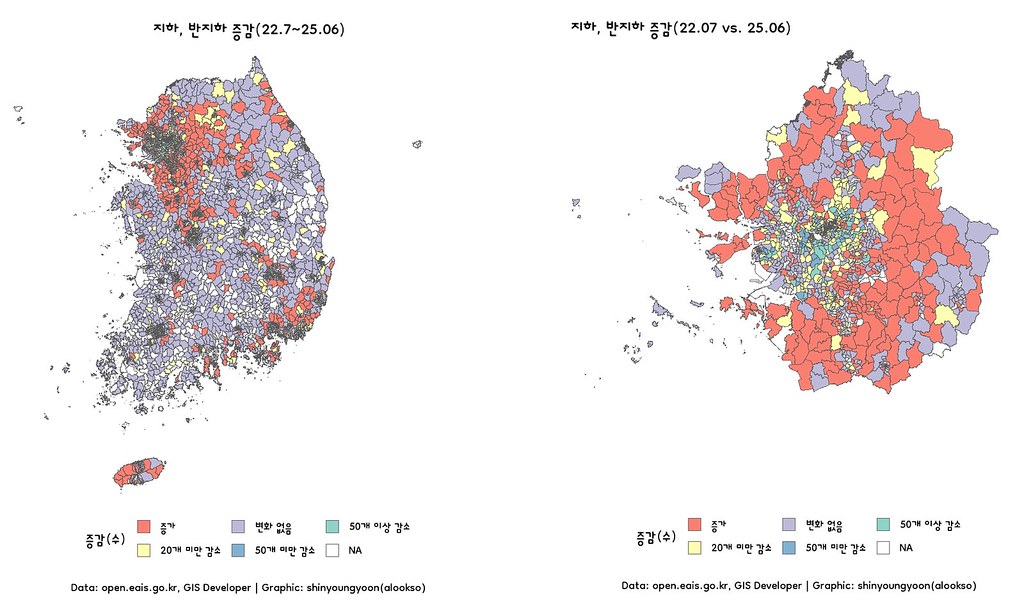
"The government has done almost nothing. At this rate, it could take a hundred years to finish their job." he said.
Semi-basements were originally built as air-raid shelters during the Korean War. After the 1970s, industrialization led to surging urban populations, and homeowners began renting out these spaces.
The lower rent made semi-basement housing an option for disadvantaged groups. However, humidity, poor ventilation, and lack of sunlight exposed residents to significant health and safety risks. When heavy rain comes, they face an even greater risk to their lives.
Over time, semi-basement housing became synonymous with the lower class. Hannah (a pseudonym) said, "My mother hates semi-basement because she experienced it before in her childhood. She always washes and cleans her floor, but mold always appears again and again."
She added that in Korea, living on high floors symbolizes success; everyone wants to move upward. Living in a semi-basement means "you haven't climbed up yet," like "being insignificant."
Shi-woo (a pseudonym), who works for an international organization, lived in a semi-basement home when he was young. He said the space was large and close to his workplace. Though his unit was not at risk of flooding, his asthma worsened while living there. He caught a cold almost every season, which has improved after moving out.
Lim Kyung-ji(임경지), policy officer of the Department of District Planning and Research of Seongdong District(城東區), offered another perspective of solving the dilemma of semi-basement housings.
"Eliminating semi-basement housing entirely is not a real solution", she said. With limited public housing, demolishing them would leave vulnerable tenants with nowhere to go and potentially go to a space with even worse living conditions.
The local government of Seongdong District did not demolish most semi-basement housing. Instead, it subsidized landlords to improve their semi-basement housing. Lim explained, if subsidies only help residents move out, new tenants will eventually move in.
Ten worst semi-basement units have been improved or changed for other purposes. We visited one previously "worst-rated" unit that had been converted into a storage space, while most other units were renovated and remained occupied.
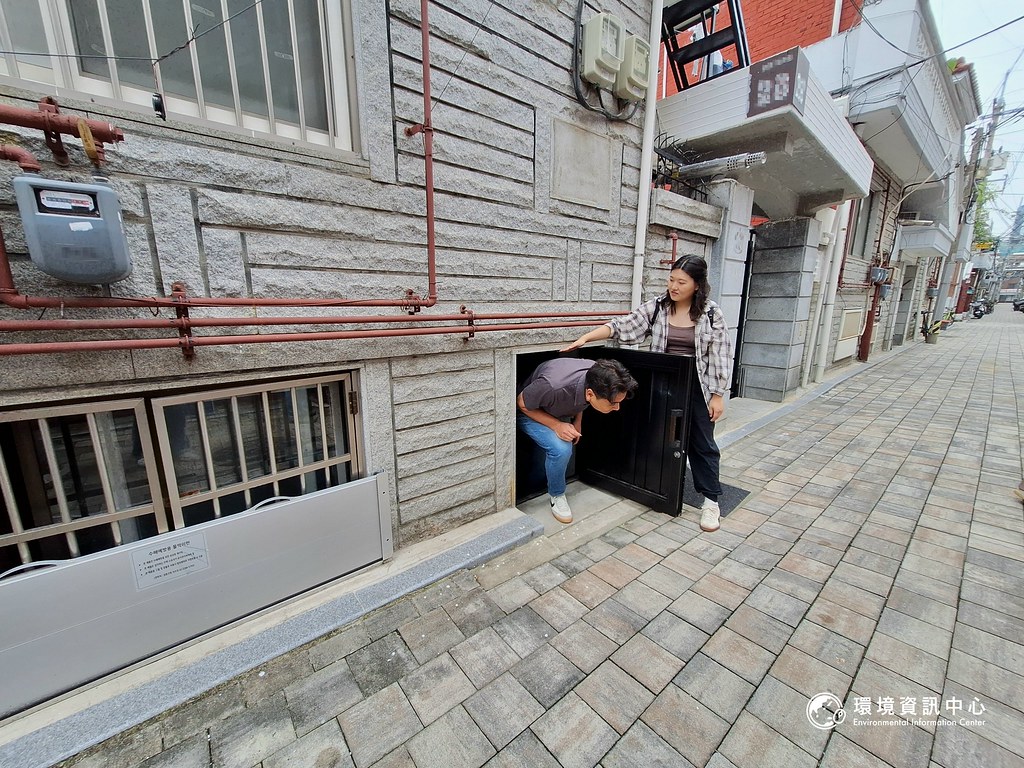
Facing recurring climate disasters, Seoul also launched a "neighbor support program"(동행 파트너) forming small groups within neighborhoods to assist vulnerable families with evacuation and help prevent a recurrence of the 2022 tragedy.
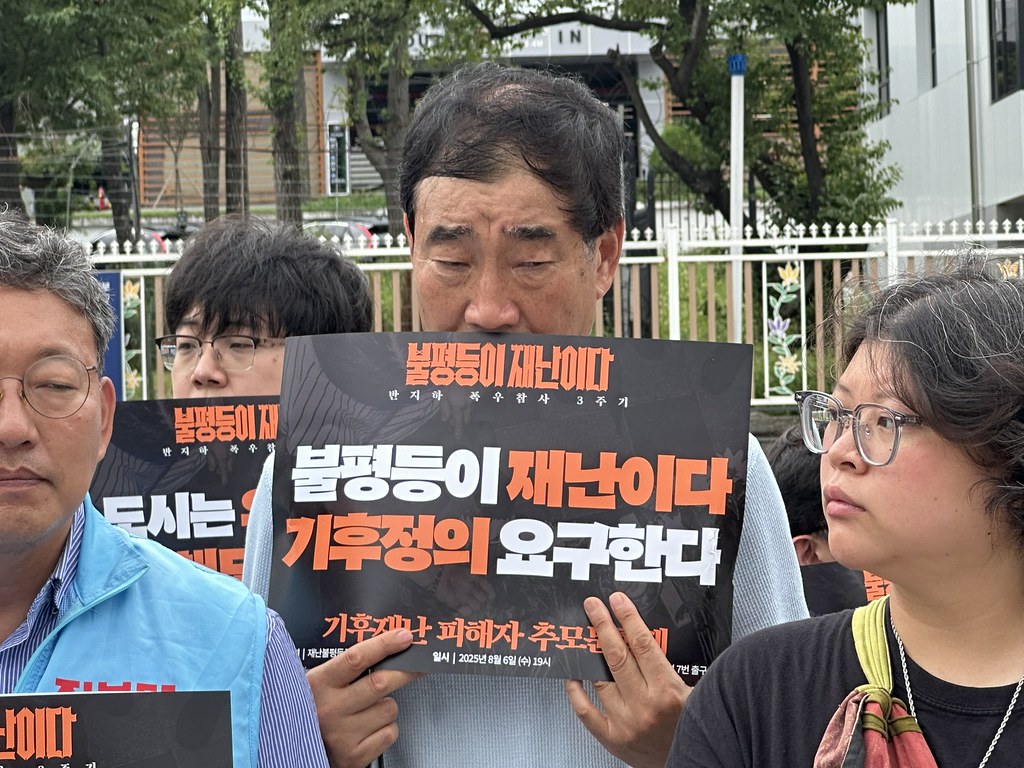
Kim Donghun, executive director of the international relief NGO The Promise, told us about the tragedy of the flooding three years ago. He said there were too many victims and they all called for the help of the 119 emergency line. Though many people rushed into semi-basement housing to rescue people who were still trapped inside, the disaster was too severe for everyone to be saved. The lives were still lost sadly.
He said, "That's why I am now promoting the urgent need for a 'citizens rescuing citizens' mechanism".
Keep learning, improving to build stronger disaster resilience
In September 2025, the barrier lake that formed on Matai'an Creek (馬太鞍溪) overflowed, leading to 19 deaths, 5 missing individuals, and 157 injuries.
We can never be truly prepared when disasters come. We can only keep learning from the pain and improve again and again. Turning the lessons into resilience against the next disasters.
Last year, the Environmental Information Center went to Japan and wrote a series of reports of Japan's experiences. This year, we focused on the experience of South Korea. Through the reporting, we hope to preserve the memory of disasters and carry forward the knowledge needed for future preparedness.
Translated by Dawson Piper