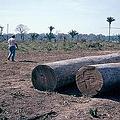
巴西政府機構「移民與土地改革所」(Institute of Colonization and Agrarian Reform,Incra)將因提供土地給違法濫墾的移民,而成為亞馬遜雨林裡最大的非法伐木者,並可能面臨控訴。
巴西環境部長明克(Cadrlos Minc)表示此事將於10月下旬進行商榷,目前另一個政府機構「巴西環境與再生自然資源所」(Brazilian Institute of Environment and Renewable Natural Resources,Ibama) 正針對移民與土地改革所進行調查。 他表示,伐木的合法性最終將由環境與再生自然資源協會來定奪。
明克表示,儘管移民與土地改革所是巴西六州土地的合法持有者,且伐林的都是移民,但是現在長年的濫墾議題將使該協會面臨土地所有權的爭議。
雖然一個人砍伐一片二、三十公頃的森林,看似不多,但數千人造成的破壞就非常驚人。明克表示同時改善其他保留區與原住民區域的伐林情形,已是刻不容緩的事。
迄今,在巴西六個州內已有22萬3千公頃的雨林遭到砍伐破壞。縱使巴西政府這3年,致力降低亞馬遜雨林嚴重的破壞速率,但是2008年的伐林量還是比去年大大增長了三倍。
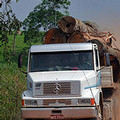
明克為此針對即將舉行的全國選舉大加撻伐,他認為亞馬遜區的行政首長們為了選票而故意忽視非法伐林的現象。他表示,無論政府或是私人行為,非法伐林者必定面臨法務部的制裁。他聲明法律制裁除了是為遏止非法伐林,最重要的用意是改正心態,讓他們也瞭解復育遭破壞林地的責任。
根據巴西環境部統計,遭到非法伐林的區域絕大部分在帕拉州(Para)、馬托格羅索州(Mato Grosso)以及朗多尼亞州(Rondonia)。
爲了對抗猖獗的盜伐,明克發布12項行動對策,首要任務是結合環境度部、工會基本法以及聯邦公訴機構的執行力,來分析調查前百大非法伐林者,並規劃讓聯邦政府有能力制裁移民與土地改革所底下的3000名涉案人員,希望可以遏止嚴重盜林。他聲明將在10月中旬前肅空朗多尼亞州裡的非法伐林者,並也催促亞馬遜州制訂對抗濫墾計畫來共同捍衛亞瑪遜雨林。
明克將利用歐盟和巴西政府各捐出的600萬歐元來管制使用「BR-163公路」(Santarém-Cuiabá highway)所貫穿的雨林區。
亞馬遜雨林面臨的摧毀危機,不只因為盜林者覬覦珍貴林材,也包含了大量闢林種植黃豆和養殖食用牛的威脅。這條尚未鋪柏油的爭議道路BR-163公路,連接庫亞巴與桑塔林,又名「大豆公路」,就是為了將北部馬托格羅索州生產的大豆,運到位於南方帕拉州的深水港出口。
明克表示,將推動連接亞馬遜州馬瑙斯市(Manaus )與朗多尼亞洲波多韋柳市(Porto Velho)港口的BR-319公路之間的林區管制計畫。
【其他參考資料】亞馬遜的最後生機 《國家地理雜誌》2007年1月號
A Brazilian government agency that provides land to settlers is the largest illegal logger in the Amazon rainforest and could face criminal prosecution, Environment Minister Carlos Minc said Monday. Minc blamed Institute of Colonization and Agrarian Reform, or Incra, for occupying the top six places on a new government list of the 100 largest illegal loggers.
Today, he backed off a little, giving another government agency 20 days to analyze information presented by Incra contesting the legality of the deforestation.
"As some questions had been raised about what is legitimate, Ibama will go to evaluate point the point," Minc said, handing responsibility for the inquiry to the Brazilian Institute of Environment and Renewable Natural Resources, or Ibama.
Minc clarified that Incra is the formal owner of the six parcels of land at issue, which in fact were deforested by the settlers. But legally, he said, the problem falls again on Incra because the Institute cannot pass ownership of land to the agriculturists until it has been settled for 10 years.
"They are small deforestations, of 20 or 30 hectares, per person. On the other hand, a small one deforests little but thousands deforest a great deal," said Minc. "Therefore, we have that to improve, and as well we have to improve the incidents of deforestation on conservation units and on aboriginal lands."
In total, 223,000 hectares of the rainforest were logged on those six properties.
The Amazon rainforest is being chopped down more than three times as fast as last year, Brazilian officials said Monday, after three years of declines in the deforestation rate.
Minc blamed upcoming nationwide elections, saying that mayors in the Amazon region are ignoring illegal logging in hopes of gaining advantage at the polls.
He said all illegal loggers on the list, public and private, will have to answer to the Department of Justice, replant what was deforested and change their attitude. "Most important is a change of attitude, to stop logging illegally with impunity and to reconstitute what it was deforested by the crimes," declared Minc.
According to minister, most of the deforestation has taken place in the states of Pará, Mato Grosso and Rondônia.
Today, Minc announced 12 actions his ministry will take to combat illegal logging.
First, he will distribute the list of the 100 largest illegal loggers and create a task force involving the Ministry of the Environment, General Law of the Union and Federal Public Prosecution Service to analyze the actions of those cited on the list.
Minc said he plans to create a federal force to fight environmental crimes with 3,000 armed agents under Ibama who will act to deter illegal logging.
He announced plans to chase illegal loggers out of the national forests of Rondônia in the second fortnight of October.
He will stimulate the state of Amazonian to produce its plan to combat deforestation to guarantee preservation of "Deep Amazônia."
Minc said he will use a donation of 6 million euros from the European Union and an equivalent amount from the Brazilian government to implement a limited-use Forest District along the unpaved BR-163 highway.
The controversial Santarém-Cuiabá (Br-163) highway has been called the soy highway, as its proposed paving would link Brazil's expanding monocrop export to a deep-water port in the Amazon.
Minc said he intends to create a work group to define conservation units along the BR-319 highway from Manaus to Porto Velho.
