
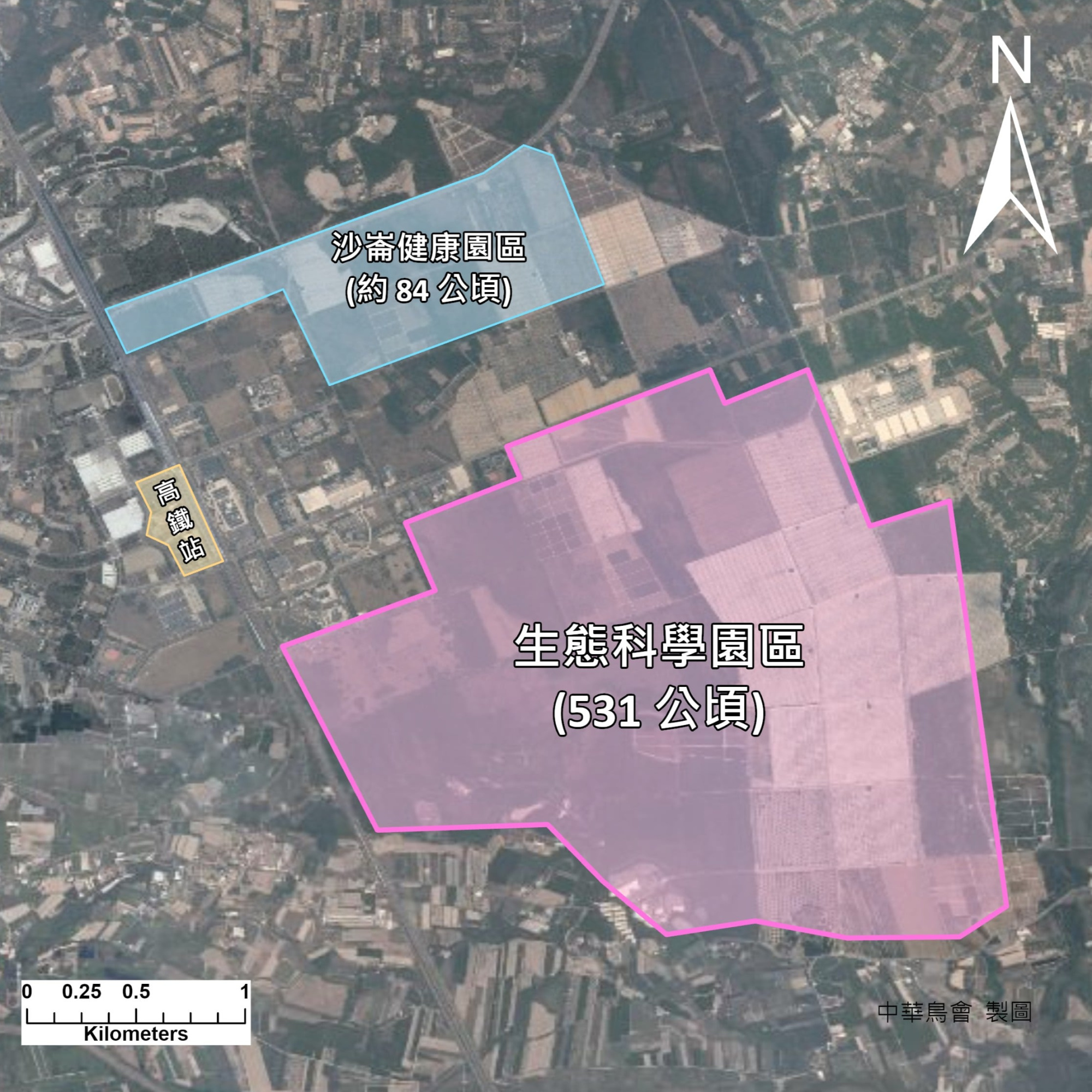
The National Science and Technology Council (NSTC, 國家科學及技術委員會) plans to establish a 531-hectare "Shalun Ecological Science Park" (沙崙生態科學園區) in Tainan. This park will complete a key part of Greater Southern Taiwan’s new Silicon Valley. However, the development area involves a portion of the Eastern Grass Owl’s (scientific name: Tyto longimembris) habitat. For the first time, NSTC announced its plan for the green space during the press conference on September 24, 2025. Civil conservation groups issued a statement in response.
NSTC stated that the Shalun Ecological Science Park will preserve 175 hectares of "grass, green space, and water," which accounts for more than one-third of the park's total area. It will also provide off-site compensation by adopting 18 hectares of habitat on the Erren River’s high riverbank (二仁溪高灘). NSTC Chairman Wu Cheng-wen (吳誠文) promised that "ecology will absolutely come first."
However, veteran birdwatchers believe that, in light of past development experiences, these "grass, green space, and water" areas are mostly public parks, green spaces, and detention ponds. These areas are not the environments that these grass owls are adapted to; there is also a risk of habitat fragmentation.
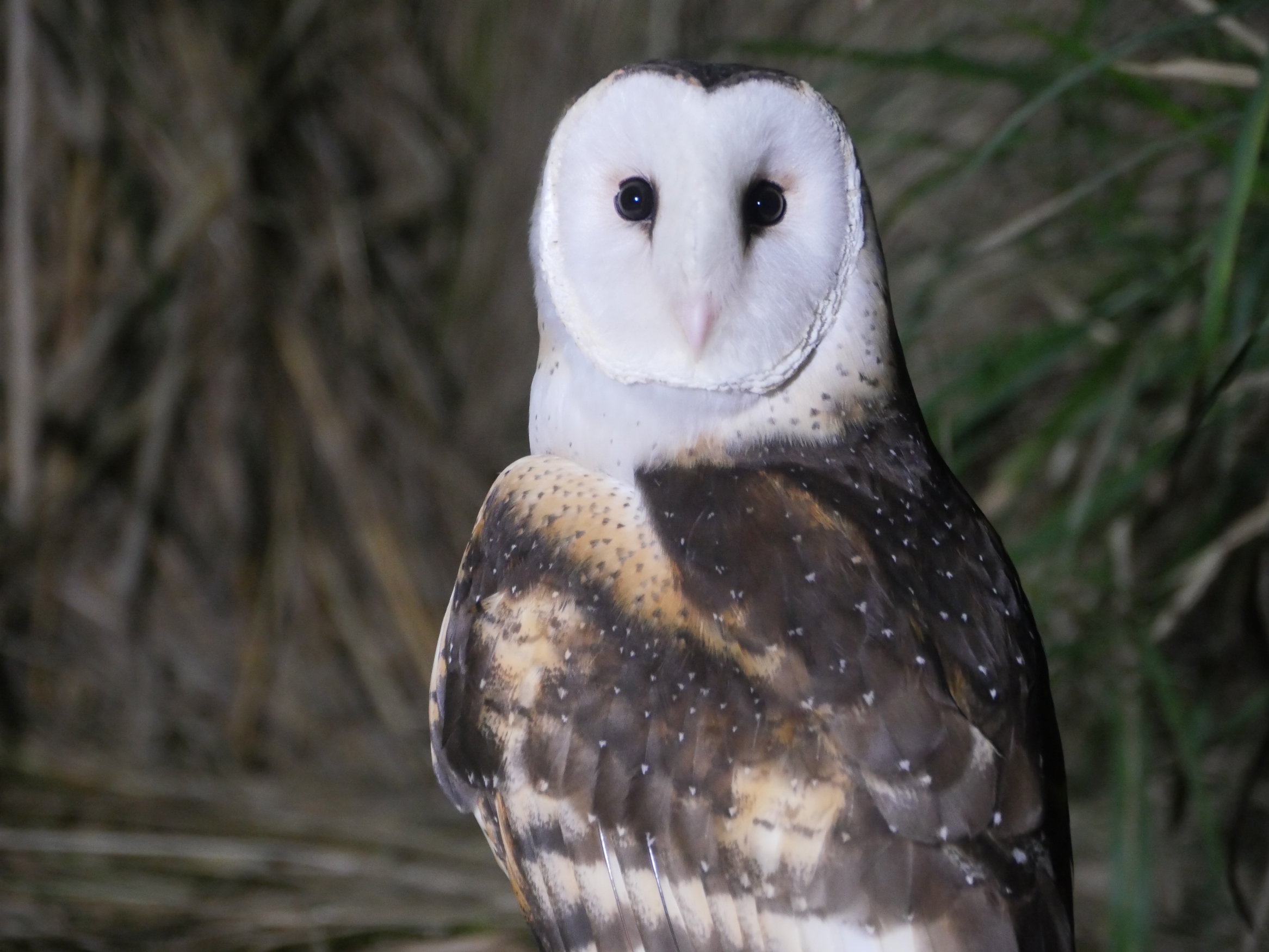
“Developing science parks must prioritize ecology.”
The Shalun Ecological Science Park goes north to connect to the Chiayi (嘉義) and Tainan (台南) science parks, and goes south to the Kaohsiung(高雄), Ciaotou (橋頭), Nanzih (楠梓), and Pingtung(屏東) science parks. It is a key piece of the government's "Greater Southern New Silicon Valley"(大南方新矽谷) plan, for the development of high-tech industries.
At the press conference on September 24th last year, the NSTC reported on the operational status of the science park for the first half of 2025. The NSTC explained that the Shalun Eco-Science Park passed the Science Park Review Committee's evaluation in last July. It is now currently under review by the Executive Yuan (行政院). The park will focus on semiconductors, Artificial Intelligence(AI), cybersecurity technology, and advanced energy as its core industries. It is expected to generate an annual output value of NT$2.24 trillion, and provide 35,000 job opportunities.
The Shalun Ecological Science Park site is now the Taisugar Shalun Farm (台糖沙崙農場), which grows crops such as pineapples, watermelons, and pasturage. Shalun Farm is also one of the habitats of the eastern grass owl, a protected species in Taiwan. Wu Cheng-wen (吳誠文), Minister of the NSTC emphasized that the development of science parks "absolutely prioritizes ecology," and that developing science parks "can also take good care of the natural environment." These parks also create economic growth for Taiwan, thereby providing necessary resources to invest in environmental and ecological protection.

The Taisugar Shalun Farm covers a total area of over 950 hectares. The development project of the Shalun Ecological Science Park will span approximately 531 hectares, more than half of the original site. NSTC stated that the entire 531 hectares will undergo a comprehensive environmental impact assessment (EIA) rather than being submitted in separate phases. Following formal appraisal from the Executive Yuan's (行政院), a public hearing will be held before the EIA is submitted to the Ministry of Environment for review. Because the development area exceeds 100 hectares, a second-stage EIA is legally required. This involves a relatively long examination period, predicted to take 18 to 23 months.
Preserving 175 hectares of "grass, green space and water"
Cheng Hsiu-jung (鄭秀絨),director of the NSTC’s Southern Taiwan Science Park (STSP) Administration, shared that since last February, the NSTC has held 13 consultations with civil corps, specialists, the Ministry of Forestry and Nature Conservation Agency (FANCA), and local residents, all with the purpose of gathering opinions and formulating conservation strategies.
The Shalun Ecological Science Park will strive to preserve as much native pastureland as possible in the future. The "grass, green space, and water" will cover about 175 hectares, accounting for more than 1/3 of the park’s total area. On top of that, the building coverage for factories is limited to 60%. With each site required to set back and include green belts all around the perimeter, the total green space will be even greater than expected.
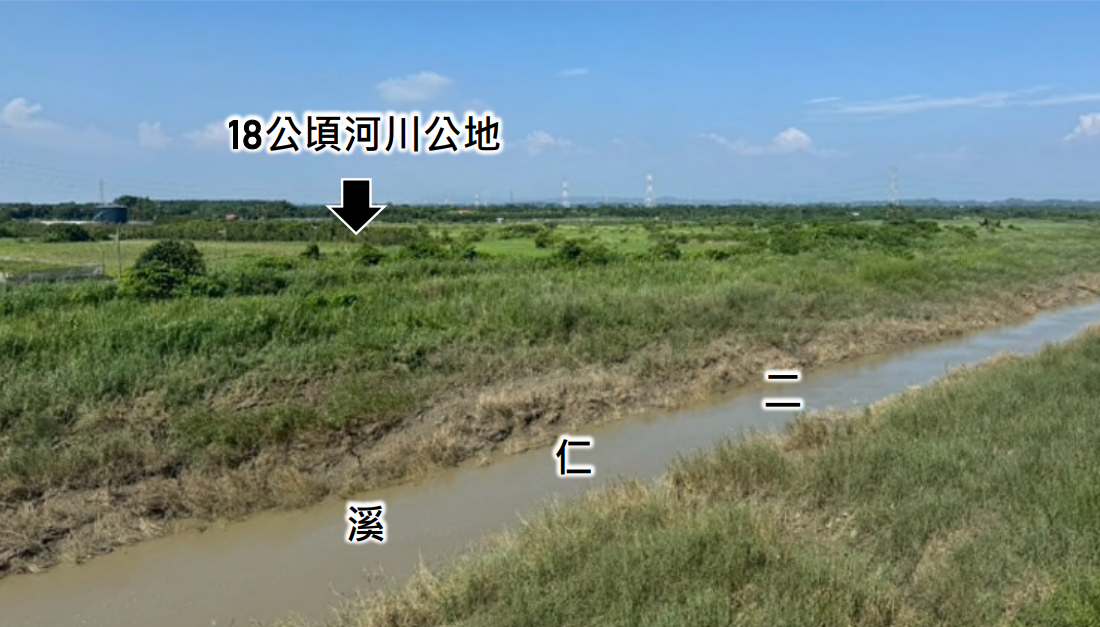
Eastern Grass Owl activity has been recorded on Erren River’s high beach area (on Shalun Science Park’s southern side). Thus, STSP Administration will adopt 18 hectares of this area as off-site compensation. Since land use permits have been obtained, a manufacturer will adopt 2 hectares for habitat creation in the fourth quarter of 2025. Other enterprises within the science park are also encouraged to participate in the restoration efforts.
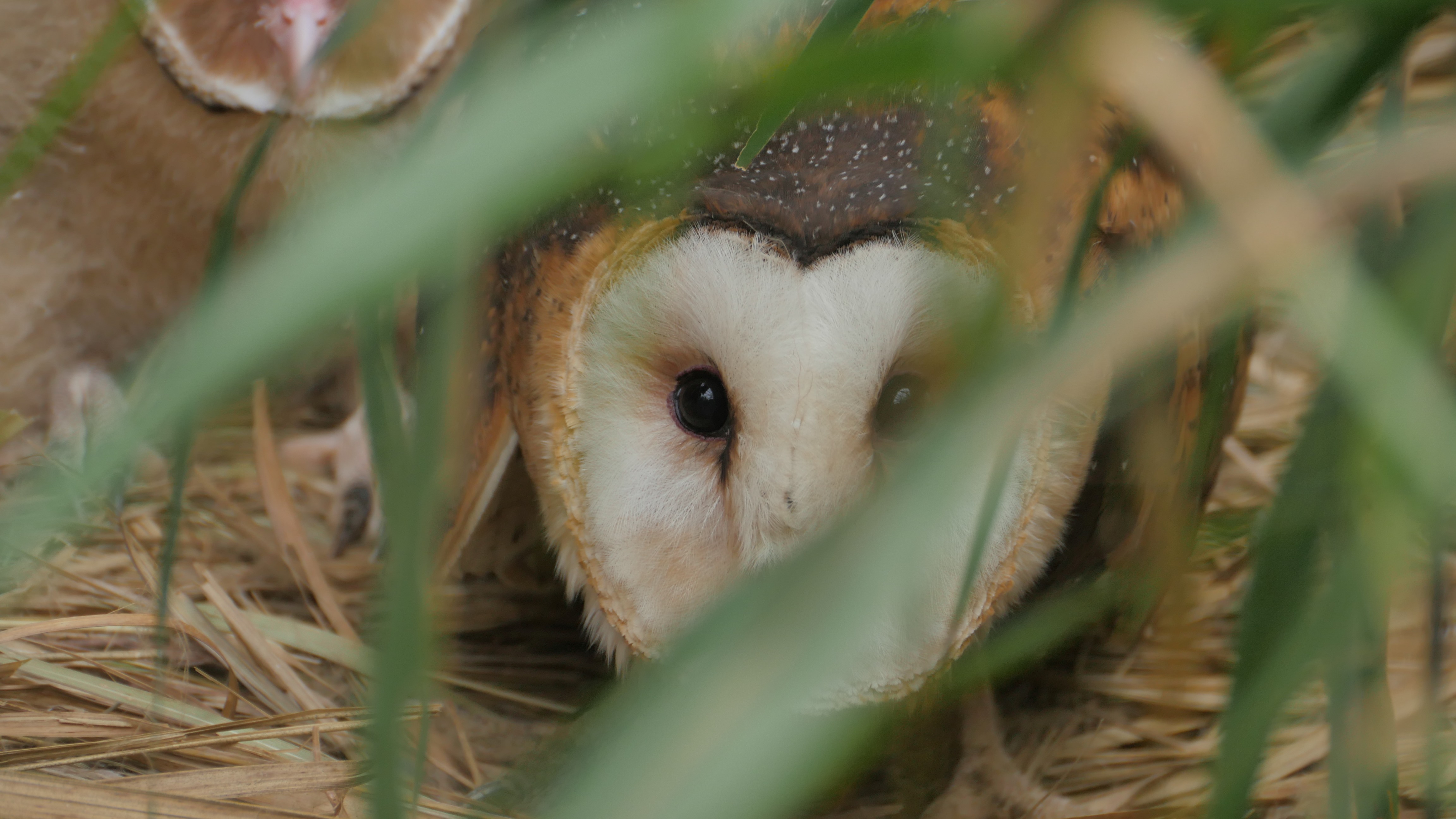
Cheng Hsiu-jung stated that the "Grass Owl Conservation Team", established during the development of the STSP Ciaotou Site, discovered that these grass owls were facing direct threats from stray dogs and rat poison used on farmland.
She emphasized that the park's comprehensive habitat planning actually benefits grass owl conservation. "If the owls eat poisoned rats, they die faster. If you don't build fences, stray dogs will get in, and young owls will die even faster."
Cheng Hsiu-jung stated that in the future, she will coordinate with the nearby Hushan Farm to adopt organic farming methods and cooperate with the MOA and Tainan City Government to encourage farmers’ participation in Payment for Ecosystem Services (PES, 生態給付).
Recently, there have been public concerns that "grass can't be planted" after construction at the Ciaotou Science Park, potentially failing to meet EIA’s commitments. Cheng responded that the park is still under construction, and habitat restoration will begin after the project is completed.
Cheng mentioned that, currently, cogon grass has already been planted at the Gunshuiping Recreational Park (in Ciaotou Science Park). Cogon grass is easy to grow and is not "unplantable" as some have claimed. Furthermore, the STSP in Kaohsiung is erecting fencing in the 24.4-hectare off-site compensation area. Invasive species such as Leucaena leucocephala (銀合歡, river tamarind) and Mimosa pudica (含羞草, shameplant) are being removed with cogon grass. It is expected to be completed by April of 2026.
Cheng added that between 2022 and 2025, "Eastern Grass Owls have come to Kaohsiung and Ciaotou Science Park every year."
However, some media reported that Ciaotou Park’s off-site compensation has been very ineffective. According to Public Television’s "Our Island ," (我們的島) Kaohsiung Wild Bird Society—which has long managed a green area within the STSP Kaohsiung Science Park—although the cogon grass there is over 1 meter tall, it has been invaded by invasive species, making it difficult for Eastern Grass Owls to utilize. “Wildlife may not like or come to the habitat you've created for them.”
Do green spaces, retention ponds, and habitat fragmentation really help?
Regarding the STSP Administration's proposal to preserve 175 hectares of "grass, green space, and water", a local veteran birdwatcher questioned the NSTC's claim of habitat preservation calling it a "calculated play on words." Based on past experience, such “preserved habitats” are mostly parks, green areas, and retention ponds, often planted with ornamental low-lying turf. While this is done to control rodents and insects and maintain the landscape, it may deprive grass owls of food sources.
The birdwatcher explained that grass owls rely on natural grass habitats (such as cogon grass) for breeding and roosting in daytime; for foraging, they utilize more natural or agricultural environments such as watermelon fields and pastures. It’s easy for parks and green spaces to attract birds adapted to urban environments, rather than grass owls, which are often afraid of people.
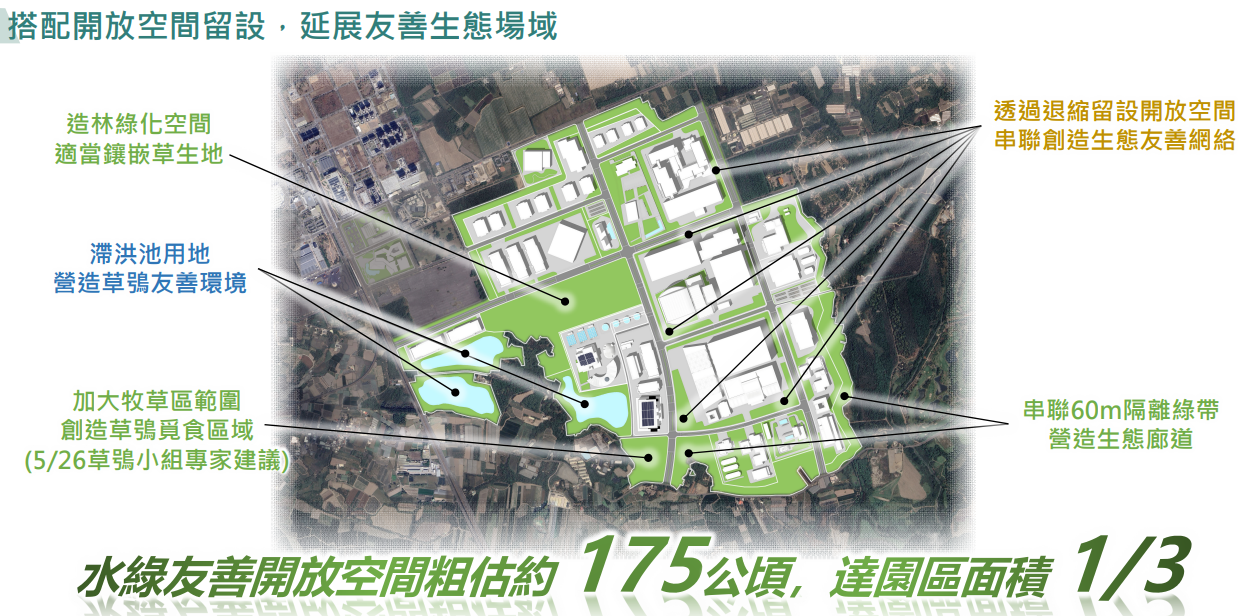
According to the NSTC's current green space planning, grass owls may also face the risk of roadkill. Birdwatchers say that the central and western parts of the park have a large area of green space, which is planned to be interspersed with grass habitats. However, grass owl habitats are cut off by roads and factory areas, requiring them to cross traffic jams and buildings to reach these grass habitats.
Additionally, the NSTC believes that retention ponds can create a grass owl-friendly environment, but birdwatchers question, "If grass owls appear in retention ponds, then there should be grass owls in all the retention ponds now." He pointed out that grass owls can indeed appear near water’s edge, but the prerequisite is that a large and continuous grass habitat must be nearby to support the population's foraging and reproduction.
He suggested that the factory area should be concentrated on the north side of the park, so that the area near Erren River in the south can form a complete segment, which would allow the grass owls to move, roost, and forage safely.
Regarding the 18-hectare off-site compensation, birdwatchers pointed out that the Erren River high riverbank was originally a habitat used by grass owls. "How effective would it be to 'make up' an existing habitat?" He emphasized that habitat can certainly be improved by planting cogon grass and driving away stray dogs, but the increase in grass owl population would likely be very limited.
Is the park's use of "ecology" just greenwashing its development?
Conservation groups including the Taiwan Wild Bird Federation (中華民國野鳥學會), the Tainan Wild Bird Society (台南市野鳥學會), and the Kaohsiung Wild Bird Society (高雄市野鳥學會) issued a statement noting that past EIA commitments made by Ciaotou Science Park for the conservation of grass owls, whether to designate a mud volcano reserve or promote conservation measures outside the reserve, have not yielded stable results after four years. This shows that compensation commitments for rare species such as grass owls are brimming with high degrees of uncertainty.
Conservation groups emphasize that their opposition is less about the park itself, and more so to firmly reject a development project "full of contradictions in logic and facts." The logic of site selection should prioritize avoidance, rather than directly encroaching on ecologically sensitive areas and destroying habitats. Current planning methods cannot fulfill conservation responsibilities.
"After all’s said and done, is the word 'ecology' in the park's name truly a core value, or merely an attempt at greenwashing the development process?" they ask. They urge the government to suspend the current procedures and conduct a rigorous assessment based on scientific evidence, with transparent information disclosure and broad public oversight. Until feasible conservation measures and social consensus are reached, development should not proceed.
Translated by Jaye Brayboy.

