國際研究人員團隊3月11日表示,硫醯氟(sulfuryl fluoride)是一種用來防制昆蟲的氣體,這種氣體有可能在未來加劇全球暖化,其潛在效應比現在最為人所知的溫室氣體二氧化碳高4,800倍。
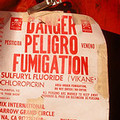
硫醯氟用來燻蒸土壤、處理白蟻、以及進行水果、核果與穀物收穫之後的昆蟲防治。因為這種氣體的生產量還未達到高峰,科學家們表示還有時間在它的影響還未成氣候的時候先行干預。
麻州理工學院(Massachusetts Institute of Technology)、史奎普斯海洋研究院(Scripps Institution of Oceanography)與其他研究機構的研究人員在3月份的《地球物理研究期刊(Journal of Geophysical Research)》中發表他們對這種氣體的研究成果。這些科學家測量大氣當中的硫醯氟含量,並確認它的排放狀況及殘留時間,來協助評估它對未來氣候的潛在影響力。
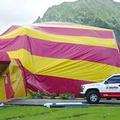
硫醯氟(SO2F2)最初是由陶氏化學公司(the Dow Chemical Company)研發出來,並廣泛用來作為一種結構性的殺蟲燻蒸劑,以防治美國西南與西北部氣候溫暖區域及夏威夷的木白蟻類昆蟲(drywood termites)。
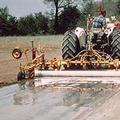
最近,硫醯氟用來取代另一種廣泛用作燻蒸劑的溴化甲烷(methyl bromide,CH3Br),但溴化甲烷因為具有破壞臭氧(ozone)的化學特性而在蒙特婁議定書(Montreal Protocol)規範之下逐漸淘汰。過去,溴化甲烷的用途包括為穀物儲藏設備、乾旱土地上集約農業的昆蟲防治──這些乾旱土地上的滴滲式灌溉系統通常會與塑膠布覆蓋土地併用,以控制水分蒸發量。
美國聯邦農業部(U.S. Department of Agriculture)在他們2008年12月的報告中表示,他們正在評估用硫醯氟燻蒸作為有效處理營利用的原木及林木中外來木材蛀蟲的方式。這份文獻共同作者之一的麻州理工學院全球變遷科學中心(MIT's Center for Global Change Science)主任普霖(Ron Prinn)指出:「這類的燻蒸劑對農業及建築業的害蟲防治是非常重要的。」然而在溴化甲烷被逐漸淘汰之際,普霖表示:「產業界必須尋找替代品,因此發展出硫醯氟來替補這個角色。」
在這個新研究之前,沒有人正確知道硫醯氟從建築物或穀物倉庫逸散出來之後,會在大氣中持續殘留多久。普霖指出:「我們的分析顯示硫醯氟的殘留時程大約是36年,比先前所認為的時程高出8倍,而海洋是它最大的儲存槽,因此如果它的使用量如人們期望的狀況成長,它將成為一個很具份量的溫室氣體」。雖然這種氣體在大氣中的含量每年以5%的成長速度增加,目前它在大氣當中含量僅約是1.5兆分之一(parts per trillion,ppt),佔非常小的份量。
根據最新研究,這種氣體有長達36年的殘留時間,再加上美國國家海洋與大氣總署(the National Oceanic and Atmospheric Administration)研究人員發現它吸收紅外線的特性,普霖指出:「這表示,以相同噸數進行比較,這種氣體吸收熱能的威力比二氧化碳高出4,800倍。」
Sulfuryl fluoride, a gas used for insect control, has the potential to contribute to future global warming at more than 4,800 times the potency of the better known greenhouse gas carbon dioxide, an international team of researchers said today.
The gas is used for soil fumigation, termite treatment and post-harvest insect control on fruits, nuts, and grains. But because sulfuryl fluoride production has not yet reached high levels there is still time to nip this potential contributor in the bud, the scientists said.
Researchers at the Massachusetts Institute of Technology, the Scripps Institution of Oceanography and other institutions are reporting the results of their study of the gas this month in the "Journal of Geophysical Research."
The scientists have measured sulfuryl fluoride levels in the atmosphere, and determined its emissions and lifetime to help gauge its potential future effects on climate.
Originally developed by the Dow Chemical Company, sulfuryl fluoride, SO2F2, is in widespread use as a structural fumigant insecticide to control drywood termites, particularly in warm weather portions of the southwestern and southeastern United States and in Hawaii.
More recently, sulfuryl fluoride has been introduced as a replacement for methyl bromide, a widely used fumigant that is being phased out under the Montreal Protocol because of its ozone-destroying chemistry. Methyl bromide has been used for insect control in grain storage facilities, and in intensive agriculture in arid lands where drip irrigation is combined with covering of the land with plastic sheets to control evaporation.
The U.S. Department of Agriculture is assessing fumigation with sulfuryl fluoride as a quarantine treatment for exotic wood boring insects in merchantable logs and timber, the agency said in a December 2008 report.
"Such fumigants are very important for controlling pests in the agricultural and building sectors," says Ron Prinn, director of MIT's Center for Global Change Science and a co-author of the new paper. But with methyl bromide being phased out, "industry had to find alternatives, so sulfuryl fluoride has evolved to fill the role," he says.
Until the new study, nobody knew accurately how long sulfuryl fluoride would last in the atmosphere after it leaked out of buildings or grain silos.
"Our analysis has shown that the lifetime is about 36 years, or eight times greater than previously thought, with the ocean being its dominant sink," Prinn says. So it would become "a greenhouse gas of some importance if the quantity of its use grows as people expect."
For now, the gas is only present in the atmosphere in very small quantities of about 1.5 parts per trillion, though it is increasing by about five percent per year.
Its newly reported 36-year lifetime, along with studies of its infrared absorbing properties by researchers at the National Oceanic and Atmospheric Administration, "indicate that, ton for ton, it is about 4,800 times more potent a heat-trapping gas than carbon dioxide," says Prinn.

